
Habits to connect: pay attention
There's a meeting I still think about. The reason being - huge life milestones were discussed - with hundreds of people who were completely checked out - and it sparked a moment of existential dread in me that has stuck.
It was a large global organisation with several hundred people on the call. Partway through the agenda, leadership reached the employee milestones sections: retirements were announced. Their names came up on screen, and their faces.
In box after box, people were somewhere else. Typing, checking email — distracted and definitely not paying attention to these milestones. It felt very dystopian.
I thought about my dad's retirement party. Family and colleagues were all in one room, his contribution was celebrated with a speech - and it was a really important moment in his life, marked and made special by the presence of people.
Sadly this distraction behaviour isn't unusual at work. We do it every day in smaller ways, present in body and absent in mind. We tell ourselves it doesn't matter - but in reality, it does.
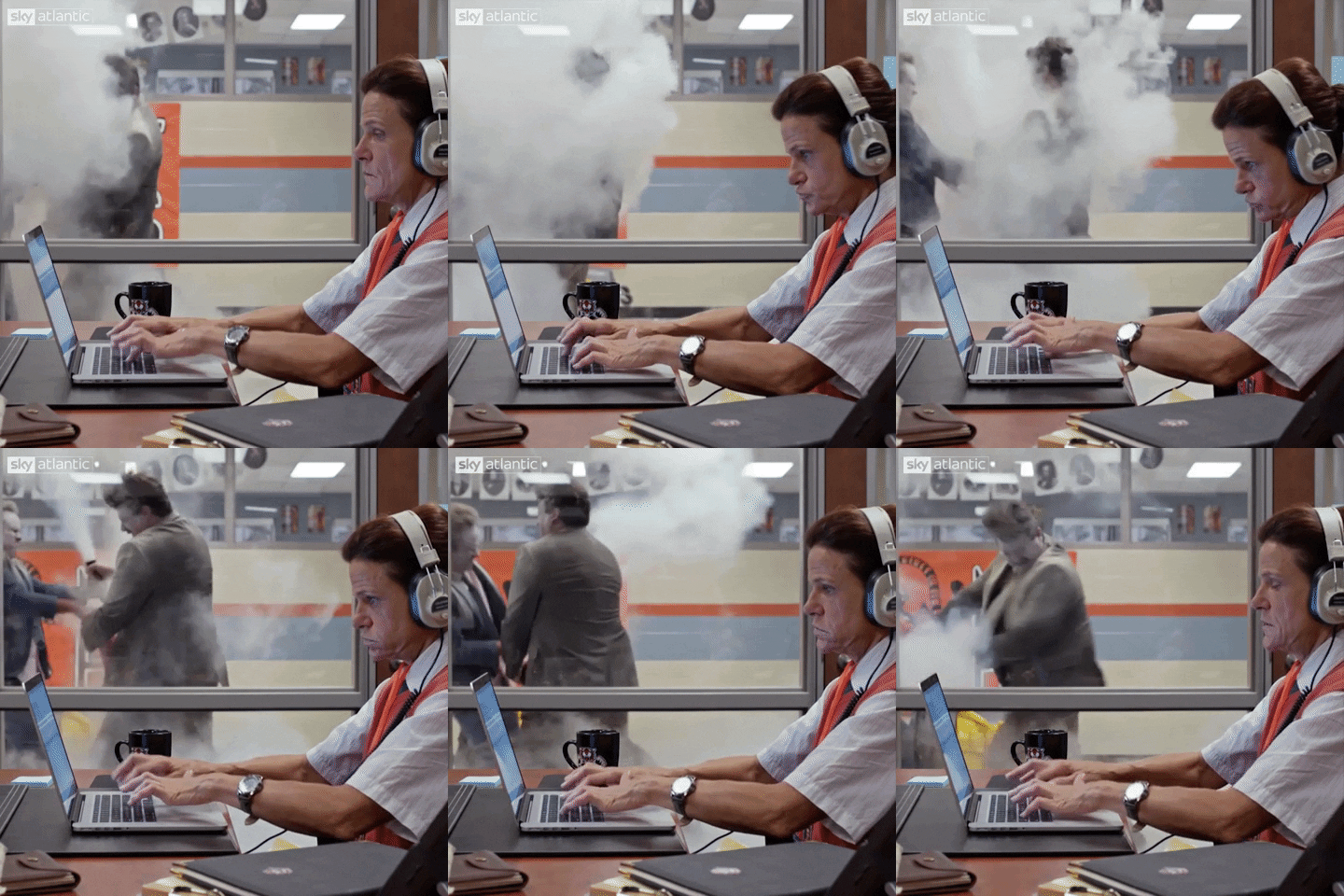
How present are you in meetings?
The Science
In 1998, Jean-Philippe Laurenceau and colleagues asked people to log their social interactions for one to two weeks. After each one they recorded what they had shared, how the other person responded, and how close they felt.
Disclosure built closeness, but not on its own. A large part of its effect ran through one thing: whether the person felt their partner had understood, accepted and cared about what they said. Researchers call this perceived partner responsiveness. Most of us would call it being listened to.
Two findings matter here. Sharing feelings built more intimacy than sharing facts. And what you say isn't enough; what lands is how it's received.
Responsiveness depends on attention, which is the scarcest resource in most workplaces.
In 2016, researchers at Virginia Tech watched 100 pairs of people talking in coffee shops. An observer noted whether a phone was on the table or in someone's hand. When a device was visible, people reported feeling less connected to each other and less empathic concern from each other. The effect was strongest between people who were close. It held across age, gender, ethnicity and mood.
The phone doesn't have to ring. Just being there changes the conversation.
The channel matters too. In 2021, Amit Kumar and Nicholas Epley at the University of Chicago found that people bonded more through voice than through text. People still reach for text because they expect a call to be awkward. It isn't, or at least not as awkward as they predict, and the connection is stronger.

Why this is a habit problem, not a values problem
Most half-present people care about others. They're half-present because their environment is designed that way: notifications on, laptop open, phone within reach.
James Clear describes habits as a loop: cue, craving, response, reward. Checking messages delivers a reward. It feels productive and responsible. Every time you check mid-conversation you strengthen the loop, and full attention gets harder next time.
Willpower in the moment loses. Design wins. If the phone is already out of the room when the conversation starts, there's no decision left to get wrong.
Listening to reply
The other failure is quieter. Someone is talking and you're already building your answer: the matching story, the advice, the reassurance. You're listening to reply, not to understand.
Laurenceau's data points to the fix. Emotion drives closeness more than facts, so the listener's job is to catch the feeling, not just the content. That means pausing, asking one more question and trying to understand the feeling behind the words. Staying with what was said before moving to what you'll do about it.

What This Looks Like in Practice
As an individual: pick one conversation this week. Close everything and put your phone out of reach. Notice what the other person shares, focus on understanding how they feel, and how you feel afterwards too.
As a manager: your one-to-ones are where trust grows or drains away. Your team adjusts what they tell you based on how much they think you'll actually hear. When someone brings you something hard, ask follow-up questions - don’t jump to solutions.
With clients: the clients who feel heard, whose context you remember and whose priorities shape the conversation, are the ones who stay. Most of your competitors aren't offering that level of attention.
The habit to watch: composing your answer while they're still talking. That's the moment you've left the conversation. Half your attention isn't enough, and people can tell.